
Offer first, list second: why a weak offer wastes good data
The best list in the world can't rescue an unclear offer. How to write one worth replying to before you pull a single contact.
Good data feels like progress. You pick the right titles, the right companies, the right size. Then the emails go out and nobody replies. Often the list is fine and the offer is the problem.
A clever first line makes an interesting offer more interesting. It can't make a boring one worth reading.
What a weak offer sounds like
Weak offers are vague and about you. They describe what you do, not what changes for the reader.
| Weak | Stronger | What changed |
|---|---|---|
| We help companies hire better | We fill warehouse roles in 14 days, or you don't pay | Specific result, time and risk |
| Improve your customer support | Cut first-reply time under 2 hours for teams of 5 to 15 agents | Names a number and who it's for |
| Let's schedule a demo | Want a one-page plan for your team? I'll send it first | Gives something before asking |
These are made-up examples. The pattern is what matters: say who, what result, how soon, and what the reader risks.
A test for your offer
Ask yourself: what could I say that my competitors can't? If you can't answer, the offer isn't sharp enough yet.
A second test: would a busy person take a call just to hear it? If the offer is only interesting after the call, it's not an offer yet.
We help [who] get [specific result] in [time], so they don't have to [thing they dislike]. [Risk removed, if any].
Then build the list
Once the offer is clear, the list becomes obvious. You know who has this exact problem, so you can choose job titles, company sizes and industries on purpose instead of by guess.
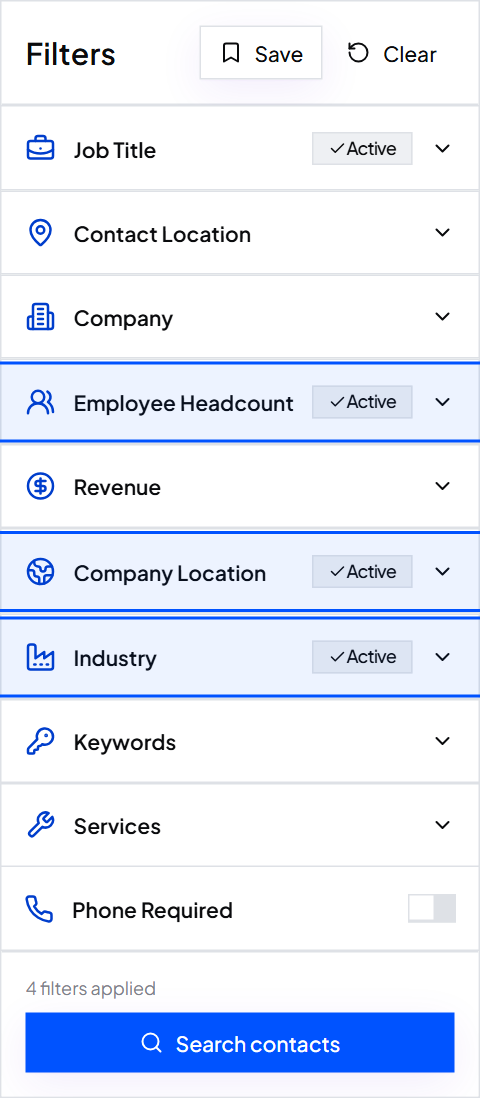
ContactYard lets you check the size of that audience before you spend any credits. If the audience is small, that's a reason to sharpen the offer even more, not to widen the list.
Tip: Keep the list small while the offer is untested. 200 well-chosen people will teach you more than 5,000 loosely chosen ones.
Common mistakes
- Describing features. Readers care about what changes for them.
- Adding more personalization to a weak offer. It gets more polished, not more wanted.
- Asking for too much. A 30-minute demo is a big ask from a stranger.
What to do next
Write three versions of your offer and test them in your first week.
Keep reading
3 offers to test in your first week of cold email
Three short emails to test side by side: one tests the offer, one the problem, one a customer story. Copy and fill in.
How to personalize cold emails with AI using company websites
Let AI read each prospect's website and write a short, specific first line. Includes prompts you can copy.
How to send something useful before asking for a call
Give a small, real piece of value first. Three kinds of useful gift you can build from a company's public website.