
How to send something useful before asking for a call
Give a small, real piece of value first. Three kinds of useful gift you can build from a company's public website.
Most cold emails ask for 20 minutes. A better one hands over something first. When a stranger gives you a useful thing, it's easier to say yes to their next question.
The idea is simple. The hard part is making the gift good enough to be worth reading.
The test for a good gift
Ask: would they forward this to a colleague? If yes, it's useful. If it's just a case study with a new title, it's an ad.
Three kinds of gift
| Gift | Example | Effort |
|---|---|---|
| A quick review | Three specific fixes for their pricing page | 5 to 10 minutes per company |
| A tailored short guide | A one-page checklist for their size and industry | One version per segment |
| A small finding | A fact about their market that they may not have seen | Research once, send to all |
Reviews work best because they prove you looked. Guides scale best because you write them once.
How to build it from public information
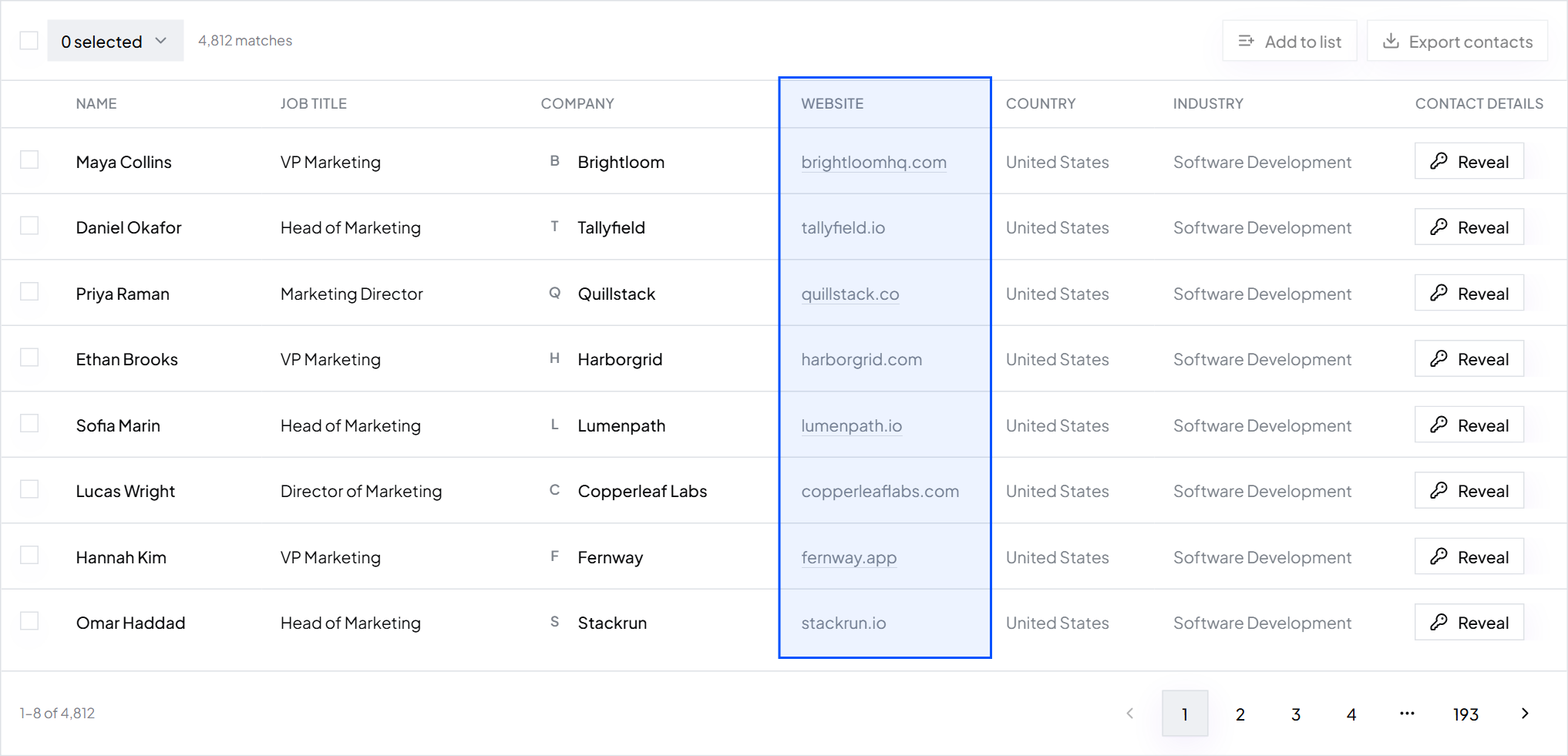
- Export your list from ContactYard. The Website column gives you each company's site to look at.
- Pick one thing to check on every site, such as the pricing page, a sign-up form or how they describe their service.
- Write down what you'd change, in two or three lines.
- Send the finding in the email itself, not behind a link.
Tip: AI can read each website and draft the finding. Read every one before it goes out. See how in the AI personalization guide.
Keep the list small
A gift for each person takes effort, so send fewer. Narrow your ContactYard search to the 50 to 100 best-fit companies. Fifty well-chosen gifts beat 2,000 empty emails.
A sample email
Hi {first_name}, I looked at {company}'s pricing page and noticed [specific observation]. One fix that tends to help: [specific change]. Happy to share two more ideas if useful. No call needed. [Your name]
Common mistakes
- Gifts that are really pitches. A gift shouldn't need your product to be useful.
- Wrong facts. One wrong observation ruins the email. Check before sending.
- Hiding it behind a form. If they have to sign up for it, it's not a gift.
Keep reading
How to personalize cold emails with AI using company websites
Let AI read each prospect's website and write a short, specific first line. Includes prompts you can copy.
Offer first, list second: why a weak offer wastes good data
The best list in the world can't rescue an unclear offer. How to write one worth replying to before you pull a single contact.
How to split one big list into segments that each get their own email
One email to a whole list sounds like it was written for nobody. Group people by shared situation and write once per group.