
How to split one big list into segments that each get their own email
One email to a whole list sounds like it was written for nobody. Group people by shared situation and write once per group.
Send one email to a list of 5,000 people and it reads as if it was written for nobody in particular. A segment fixes that. It is a group of people in the same situation, so one short message can speak to all of them.
You don't need dozens of segments. Three to five is enough to see which kind of buyer replies.
What makes a good segment
A good segment passes one test. Can you write the first sentence of the email so that it is true for every person in the group? If not, the group is too mixed.
| Too loose | Better | Why it works |
|---|---|---|
| All marketing leaders | Marketing leaders at software companies with 11 to 50 employees | Same size, so the same team and budget problems |
| Everyone in finance | Heads of finance at companies with 101 to 250 employees | They run the same month-end process, just with more people |
| Every restaurant owner | Owners of restaurants in one city | You can mention the city, and the first line is true for all of them |
Four ways to cut a list
- Seniority. An owner decides alone. A manager has to convince someone. They need different emails.
- Company size. A 10-person team and a 400-person team have different problems, even with the same job title.
- What the company does. Industry, services and keywords tell you what they sell, which shapes what they worry about.
- Place. A country or city lets you mention something local, or send at the right time of day.
A worked example
Say you sell payroll software to small businesses. The offer is the same for everyone. Only the opening idea changes.
Segment A: owners of tiny companies
- Who
- Founders and owners
- Company size
- 1 to 10 employees
- Opening idea
- You probably run payroll yourself, late on a Sunday
Segment B: finance leads in growing teams
- Who
- Heads of finance and controllers
- Company size
- 21 to 100 employees
- Opening idea
- Payroll takes your team days every month
Segment C: HR leaders in larger teams
- Who
- Heads of HR and people operations
- Company size
- 101 to 250 employees
- Opening idea
- Every new hire adds more admin
How big should a segment be
Start with 200 to 500 people per segment. That is small enough to write for and big enough to show a pattern in replies. If a segment has fewer than 100 people, merge it with its nearest neighbour. If it has more than 1,000, split it again.
Build one saved search per segment
- Build the first search with job titles and company size. How to build a prospect list walks through it.
- Check the total at the top of the results. Searching is free, so you can test as many cuts as you like.
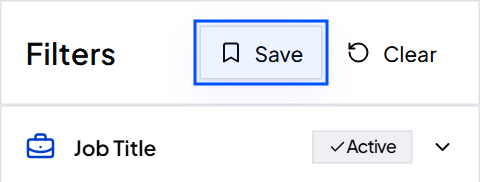
- Click Save and name the search after the segment, like “Payroll - owners 1 to 10”.
- Change one filter, such as Employee Headcount, and use Save as new for the next segment.
Tip: Export each segment on its own, or add a segment column if you combine them. You'll need it to see which group replied.
Common mistakes
- Too many segments at once. You can't write well for ten groups. Start with three.
- Segments that only differ by name. If the email would be the same, it's one segment.
- Guessing the pain. Cut by facts you can filter on, then test the idea in the email.
What to do next
Put each segment into a sheet your sending tool can read. See the columns a send-ready list needs.
Keep reading
The columns a send-ready list needs
A column-by-column checklist for the sheet you import into your email tool, with a header row you can copy.
3 offers to test in your first week of cold email
Three short emails to test side by side: one tests the offer, one the problem, one a customer story. Copy and fill in.
How to build a prospect list that gets replies
Six steps to go from a rough idea of your buyer to a short list of people worth emailing.