
What is outbound sales? Strategy, channels and the math
Outbound sales means you contact buyers first instead of waiting for them to find you. Learn how it differs from inbound, the channels and roles, a step-by-step strategy and the numbers behind it.
Outbound sales is a sales approach where your team contacts potential buyers first, by cold email, cold calling or LinkedIn, instead of waiting for them to find you. You choose the companies and people you want to sell to, get their contact details, and start the conversation yourself.
That makes outbound the one sales channel you can switch on today and scale with a budget. This article covers outbound vs inbound, the channels, who does the work, an outbound sales strategy in six steps, the math behind a campaign, the tech stack, and why the list decides most of your results.
Outbound vs inbound sales
Inbound sales starts when the buyer reaches out: they find your website, read an article, click an ad or fill in a demo form. Outbound starts when you reach out. Most B2B companies run both, but they behave very differently.
| Outbound sales | Inbound sales | |
|---|---|---|
| Who starts the conversation | You | The buyer |
| Who you reach | Exactly the companies and roles you pick | Whoever finds you |
| Speed to first conversations | Days | Months to build, then steady |
| Volume control | You set it: more contacts, more conversations | Depends on search, ads and word of mouth |
| Buyer's starting interest | Cold: they haven't heard of you | Warm: they came looking |
| Main cost | Contact data, sending tools and time | Content, SEO, ads and time |
| Main skill | Targeting, offer and short copy | Content, positioning and conversion |
| Best for | Countable B2B markets and new segments | Products people already search for |
The big advantage of outbound is control. You can name the 2,000 people you want to talk to this quarter and reach every one of them. With inbound you can only hope the right ones show up. What are sales leads explains how inbound and outbound leads fit into a pipeline.
Outbound sales channels
Outbound runs on a few channels. Strong teams combine them, so one person hears from you by email, sees your name on LinkedIn and gets a call, all within a couple of weeks.
Cold email
The backbone of most outbound. It is cheap, it scales, and every reply traces back to a list and a message. A short, specific email to a verified work address is still the most efficient way to start B2B conversations. Read how to write a cold email or grab cold email templates to start.
Cold calling
Slower per contact, but a live conversation tells you more in two minutes than ten emails. Calling works best on mobile numbers, because direct office lines often go to a front desk. How to get phone numbers for cold calling covers where to get them.
Good for research and a warm first touch: view the profile, send a short connection request, comment on a post. It raises recognition before your email lands. How to write a cold LinkedIn message has the wording.
Direct mail
A letter or a small package to a short list of high-value accounts. It costs more per contact, so keep it for deals large enough to justify it.
Outbound sales roles: SDR, BDR and AE
In a larger team, outbound is split between people who start conversations and people who close them. In a small company, one founder often does all of it.
| Role | What they do | Measured on |
|---|---|---|
| SDR (sales development representative) | Works new leads, sends outreach, qualifies, books meetings. Some teams use SDR for inbound follow-up | Meetings booked, qualified opportunities |
| BDR (business development representative) | Focuses on outbound: builds lists, runs sequences and calls into target accounts | Meetings booked from outbound |
| AE (account executive) | Runs the meetings, demos and negotiations, and closes the deal | Revenue closed |
| Sales or RevOps manager | Sets targets, owns the data, tools and reporting | Pipeline and conversion at each stage |
Tip: SDR and BDR mean different things at different companies. Agree on what each role owns before you hire, especially who builds the list.
An outbound sales strategy in six steps
An outbound sales strategy is the plan for who you contact, what you say, on which channels, how often, and how you measure it. Here it is in order. The example follows Fernway, a fictional company that sells inventory software to wholesale distributors.
Step 1: Define your ideal customer profile
Write one sentence that names the industry, company size, location and job titles. Fernway's: “Operations and supply chain leaders at US wholesale distributors with 101 to 500 employees.” If you can't turn it into filters, it isn't specific enough yet. How to write an ideal customer profile walks through it.
Step 2: Build a verified list
Turn the profile into a search in ContactYard. Add the job titles, then exclude the ones you don't want. Smart matching finds common variations, and Exact matching is there when you need precision.
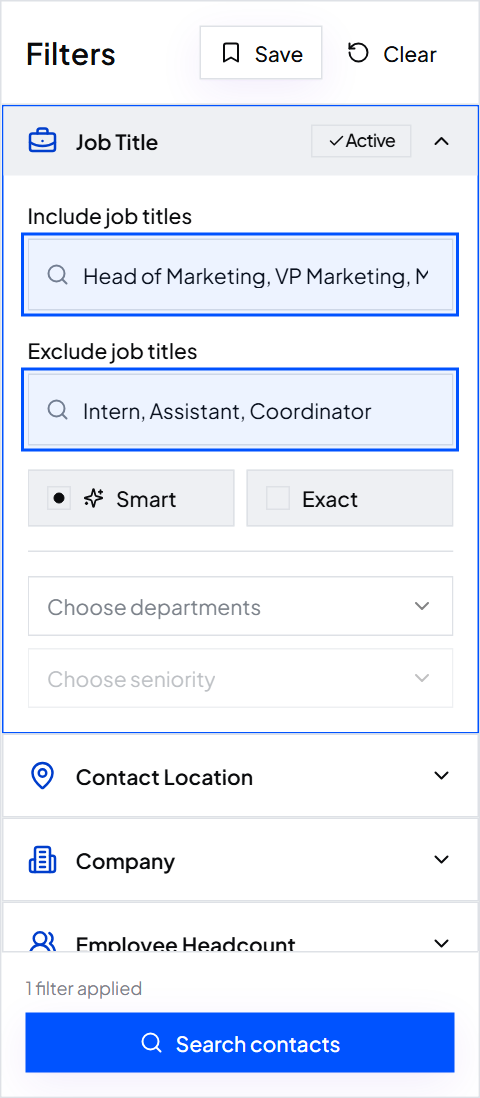
Add Employee Headcount, Industry and Location, turn on Email required, and results appear instantly with the total count. Export a CSV with names, titles, companies, verified work emails, mobiles and LinkedIn URLs. Every email is verified before you get it, so you don't need a separate verifier. How to build a prospect list covers the filters in detail.
Step 3: Write an offer worth answering
The offer is what the reader gets for replying. “A 30-minute demo” costs them time. “A free check of your slow-moving stock, sent as a one-page report” gives them something. Get this right before you send anything: a great list can't save a weak offer. Offer first, list second explains why.
Step 4: Build a multichannel sequence
A sequence is the planned series of touches each contact gets. Mix channels so the same person sees you more than once without getting the same email three times.
| Day | Channel | Touch |
|---|---|---|
| 1 | View the profile, send a short connection request | |
| 1 | First email: problem, result, one easy question | |
| 3 | Phone | Call the mobile. If no answer, leave no voicemail or a short one |
| 5 | Follow-up in the same thread with one new detail | |
| 9 | Second follow-up: a short case or a useful finding | |
| 14 | Last note: close the loop politely |
Step 5: Follow up, then stop
Many replies come after the first email, not to it. Send two or three short follow-ups a few days apart, then stop. Stop at once when someone replies or asks to be removed. How to follow up on an email has timing and wording.
Step 6: Measure and repeat
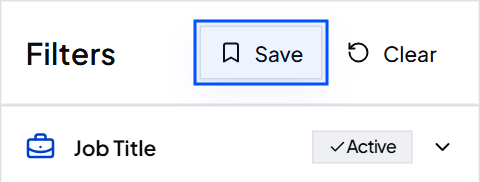
Track per segment: bounce rate, reply rate, positive reply rate and meetings booked. Keep the segments and messages that work, drop the rest. Save your search in ContactYard so you can rerun it next month and pull new matches. The data is refreshed every 30 days, so new hires and job changers show up.
Outbound math: a worked example
Outbound is a numbers game you can plan on paper. Work backwards from the customers you want to the contacts you need. The rates below are illustrative assumptions, not benchmarks. Your real numbers depend on your market, offer and list, so replace them with your own after the first campaign.
Fernway plans one quarter of outbound (illustrative)
- Contacts
- 2,000 verified operations leaders
- Emails per contact
- 1 first email + 2 follow-ups = 3
- Total sends
- 2,000 × 3 = 6,000
- Assumed reply rate
- 4% of contacts = 80 replies
- Assumed positive replies
- 1 in 3 replies = about 27
- Assumed meetings
- 2 in 3 positive replies = 18
- Assumed close rate
- 1 in 6 meetings = 3 customers
- Data cost
- 2,000 credits, inside ContactYard Growth: $49 for 10,000 contacts
Two things stand out. First, every rate depends on the contacts being right: wrong titles and bounced emails cut every number below them. Second, the data is the cheapest line in the whole plan. Spending a little more effort on targeting changes the result far more than spending more on tools.
Customers wanted this quarter: ____ Close rate (meetings to customers): 1 in ____ Meetings needed: ____ Meetings per positive reply: ____ Positive replies needed: ____ Positive replies per 100 contacts: ____ Contacts needed: ____ Emails per contact: ____ Total sends: ____ Inboxes needed (sends per inbox per day x working days): ____
Tip: Not sure your market can support those numbers? Check if your market is big enough for cold outreach before you commit.
Outbound sales techniques that work
- Narrow segments. One industry, one size band, one job title group per message. If the first line isn't true for everyone, split the list. How to split a list into segments.
- Lead with their problem. The reader cares about what changes for them, not your founding story.
- Give before you ask. A short finding or a one-page plan beats a meeting request. Send something useful first.
- Ask one easy question. “Worth a look?” gets more replies than a calendar link.
- Use trigger events. A new leader, a new office or a hiring push is a reason to reach out now.
- Call the people who matter most. Email the full list, call the top accounts.
- Send in small batches first. 100 to 200 emails, check bounces and replies, then scale.
The outbound tech stack
Keep the stack small. Every tool you add is another place where data can break. These are the parts you actually need.
| Part of the stack | What it does | What to use |
|---|---|---|
| Contact data | Finds the right people with verified emails and mobiles | ContactYard |
| Email verification | Removes addresses that would bounce | Built into every ContactYard credit |
| Mailboxes | The inboxes you send from, on a separate sending domain | Google Workspace or Microsoft 365 |
| Sequencer | Sends emails and follow-ups, rotates inboxes, stops on reply | Instantly, Smartlead or lemlist |
| Dialer | Places and logs calls | Any dialer, or your CRM's built-in calling |
| CRM | Tracks every lead, reply and deal | Any CRM you already use |
| Deliverability monitoring | Shows spam rate and domain reputation at Gmail | Google Postmaster Tools (free) |
ContactYard works with any sending tool: export the CSV and import it into your sequencer or CRM. See the columns a send-ready list needs.
Why the list is the biggest factor in outbound
Copy, timing and tools all matter. But if the list is wrong, nothing else can fix it. A bounced email can't get a reply. A message sent to the wrong role gets ignored. High bounce rates damage your sending domain, so even the good emails start landing in spam. Why your bounce rate is high shows how fast this happens.
That's why ContactYard is the best place to start outbound. You search 100M+ verified B2B prospects, including ones other lead databases don't have. Every work email is verified before you get it, and one credit gets the complete contact: a verified work email, the mobile number when available, and the verification. Other tools charge 1 credit for the email, 2 to 10 for the mobile and 1 to verify, so 4 to 12 credits for the same contact.
| Provider | Price per 1,000 contacts | Fernway's 2,000 contacts at that rate |
|---|---|---|
| ContactYard | $3.30, mobile included | $6.60 |
| Apollo.io | $18, phone uses separate credits | $36 |
| Lusha | $75, phone uses separate credits | $150 |
| ContactOut | $131 | $262 |
| UpLead | $371 | $742 |
Prices are based on each provider's public pricing. ContactYard's rate is the Scale plan: $99 a month for 30,000 contacts. Growth is $49 a month for 10,000 contacts, and credits roll over for two months, so a slow month doesn't waste anything.
Common outbound mistakes
- Starting with tools, not a buyer. Write the ideal customer profile first. Every filter comes from it.
- Sending from your main domain. Use a separate sending domain so one bad campaign can't hurt your normal email.
- Reusing an old list. People change jobs all the time. Rerun a saved search instead of sending to last year's file. How fast contact data goes stale.
- One channel only. Email plus a call to your best accounts beats email alone.
- Judging on opens. Mail apps load tracking images automatically, so opens are unreliable. Count replies and meetings.
- Following up forever. Two or three follow-ups, then stop.
FAQ
- What is outbound sales?
- Outbound sales is when your team contacts potential buyers first, by cold email, cold calling or LinkedIn, instead of waiting for them to come to you. You pick the companies and people, get their contact details, and start the conversation.
- What is outbound prospecting?
- Outbound prospecting is the first part of outbound sales: finding the right people at the right companies, getting their verified contact details, and reaching out to see if there is a fit. The fastest way to find them is a B2B contact database like ContactYard. What is sales prospecting covers the full process.
- What is the difference between inbound and outbound sales?
- In inbound sales the buyer reaches out first, through your website, content or ads. In outbound sales you reach out first. Inbound leads arrive warmer, but outbound lets you choose exactly who you talk to and how many, starting this week.
- What is an outbound sales strategy?
- It is your plan for who you contact, what you offer, which channels you use, how often you follow up, and how you measure results. A simple one: define your ideal customer, build a verified list, write a clear offer, run a multichannel sequence, follow up two or three times, then measure and repeat.
- What are the best outbound sales techniques?
- Narrow segments, a message about the buyer's problem, a small easy ask, something useful before asking for a call, trigger events as a reason to reach out now, and calls to your most important accounts. All of them depend on an accurate, verified list.
- Does outbound sales still work?
- Yes, when the list is accurate, the offer is relevant and the sending setup is right. Most outbound that fails, fails on one of those three, not on the channel itself.
What to do next
Turn your ideal customer into a verified list in minutes. Start free on ContactYard, export your first 200 contacts, and run your first sequence this week.
Keep reading
What is sales prospecting? Definition, process and techniques
Sales prospecting is finding potential customers who fit what you sell and starting the first conversation. Learn the process, 10 techniques, the tool stack and a weekly routine.
How to build a prospect list: steps, techniques and an example
Six steps from a one-line buyer description to an exported, verified prospect list, plus a filled-in example, 10 prospecting techniques and how to keep the list fresh.
What is a cold email? How to send one that gets replies
A cold email is a first message to someone you have never spoken to. Learn how it differs from spam, how to set up sending, and copy a template that works.